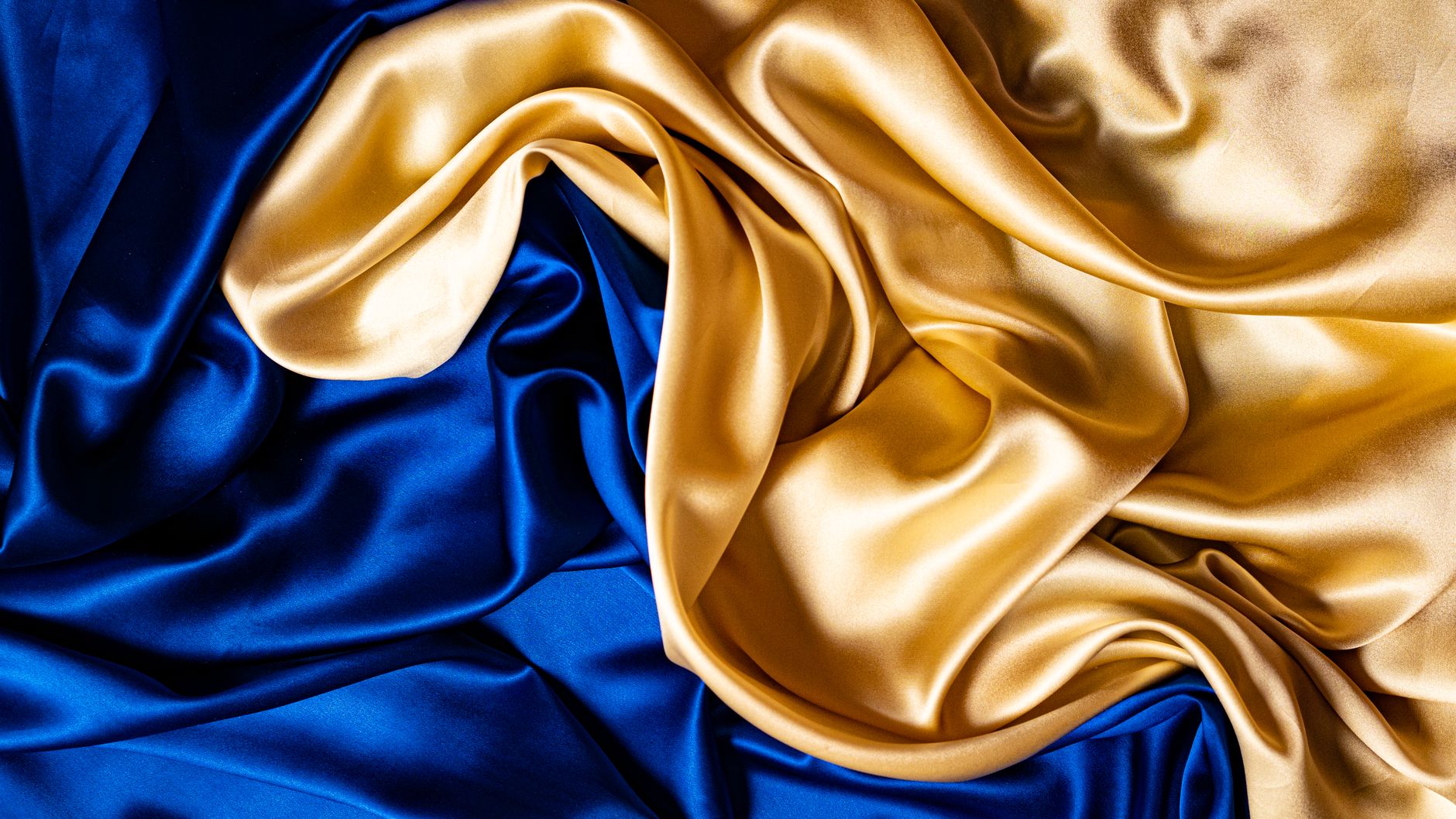
Who doesn’t love silk. That cool slide of it against your skin, the way it catches light like it’s got its own private sun, it oozes luxury and a bit of sophistication, and it always has. The trouble is, when it comes to silk vs polyester, the copies have gotten very good, and these days it can be genuinely hard to tell the two apart just by looking.
I found this out the hard way recently, buying two silk pillowcases on Ebay, sold as a matching pair. Same listing, same photos, same “100% silk” in the title. One of them is silk. I am almost certain the other one is not. Same size, same colour, and yet something about it is just… shinier than it should be. That difference is basically the whole post.
Why the Fakes Are So Convincing
People have been faking, taxing and stealing the secret of silk for pretty much all of recorded history — China guarded how it was made as a state secret for thousands of years, on pain of death. Polyester is just the modern version of a very old obsession, and it’s gotten good at the one job it has: mimicking that smooth, reflective surface that makes silk look expensive.
The real tell is in the fibre itself. Silk is a natural protein fibre with a triangular cross-section, so light hits it at different angles and scatters slightly, giving it a softer, slightly duller sheen that shifts a little as you move it. Polyester fibres are perfectly round and uniform, so the shine is flatter, glossier, closer to plastic. It’s why real silk almost always looks a touch less shiny than the polyester next to it, even though you’d expect the opposite. That duller, more complex shine is one of the biggest tells there is.
The Tests That Actually Work

You’ll see the burn test recommended everywhere: snip a thread, set it alight, and silk burns slowly, self-extinguishes and smells like burnt hair, while polyester melts into a hard little bead and smells like a chemical fire. It works, but it’s destructive, and not something you want to do to a pillowcase you’ve just paid for. So here are the ones that don’t involve a lighter.
- The scroop test. My favourite, and centuries old. Genuine silk, when rubbed against itself, makes a distinctive crisp, rustling sound, almost a faint crunch, known in the textile trade as “scroop.” It comes from the natural sericin left on the fibre during processing. Polyester stays silent, or at best makes a slippery, synthetic sort of swish.
- The cool touch test. Lay both fabrics flat and place your palm on each. Silk has a natural ability to regulate temperature and will feel genuinely cool against your skin for a moment before warming up. Polyester tends to feel closer to room temperature straight away, without that same cool snap.
- The water test. Silk is a natural fibre and will absorb a small water droplet fairly quickly, leaving a slightly damp mark. Polyester is hydrophobic, so a drop of water tends to sit on the surface or bead up rather than soaking in. Try it on an inside seam allowance, somewhere it won’t show.
Grades of Silk (Because It Isn’t Just One Thing)
Even genuine silk isn’t one single standard. Mulberry silk, from the Bombyx mori silkworm fed exclusively on mulberry leaves, is the smoothest, most uniform and most widely available, and it’s what you’re almost always buying when something is labelled simply “silk.” Tussar or wild silk comes from silkworms that feed on a wider range of leaves in the wild, and it has a slightly rougher texture and a natural gold undertone rather than mulberry’s clean white. Peace silk, sometimes called Ahimsa silk, is produced by letting the moth emerge from the cocoon before the thread is harvested, which makes the fibre slightly shorter and less uniform, but avoids killing the pupa.
For anything woven, like pillowcases and bedding, you’ll also see momme weight mentioned, usually somewhere between 16 and 30. It’s a measure of density, not purity: a 19 to 25 momme pillowcase is generally considered a good, durable weight, but a lower momme doesn’t mean it’s fake, just lighter and probably a bit more delicate.
The Honest Bit
None of this means you should stop buying secondhand silk, or that you got fleeced if one of your pillowcases turns out to be polyester. Vintage and secondhand sellers are very rarely lying on purpose; most of the time they’re repeating what they were told, or what was on a label that faded off years ago. A three pound pillowcase that turns out to be polyester is still a perfectly nice pillowcase. It’s just not the one you thought you bought.
What I’d actually suggest is not trusting a listing title alone, and giving the fabric a proper once-over instead. Do the scroop test before you buy if you can, or ask for a close-up photo of the fabric catching the light if you can’t. And if you already own something you’re not sure about, there’s no shame in doing a bit of gentle detective work on a hidden seam rather than assuming the worst.
This post contains affiliate links. If you click and make a purchase I may earn a small commission, at no extra cost to you.
Leave a Reply